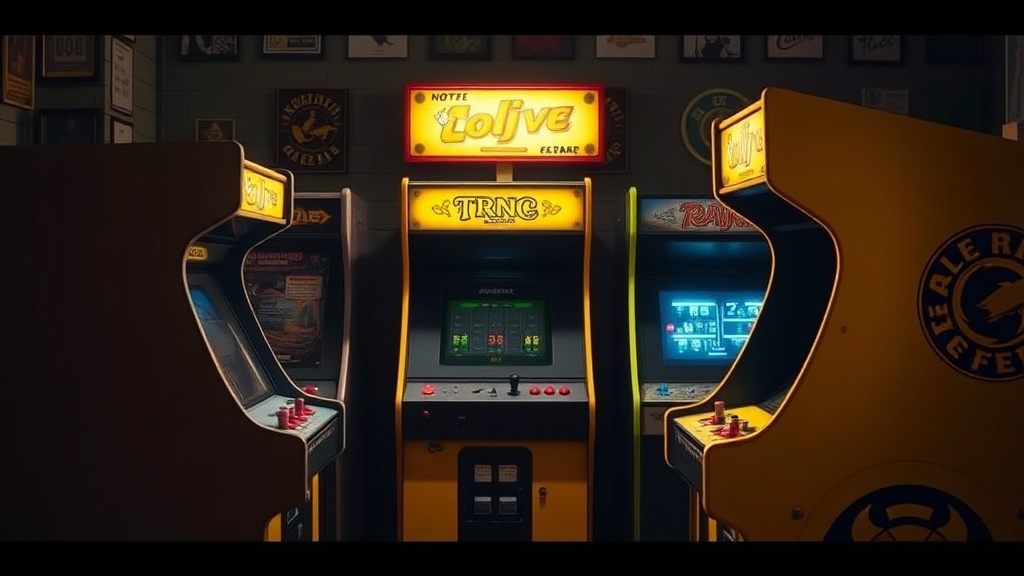
Why Do Arcade Cabinets Yellow? 7 Preservation Mistakes Collectors Keep Making

The Hidden Enemy Lurking in Your Game Room
Here's something that'll keep you up at night—studies from plastics conservation labs show that arcade cabinet ABS plastic can lose up to 40% of its original color stability within just 10 years when stored improperly. That pristine white Neo-Geo cabinet you bought in 2015? It might already be turning cream-colored without you noticing. Arcade machines aren't just gaming devices—they're industrial art pieces worth preserving. And most collectors (even experienced ones) are accidentally destroying their investments through everyday habits they never question.
The $4.2 billion retro arcade market depends on condition. A mint-condition Ms. Pac-Man cocktail table can fetch $8,000. The same cabinet with yellowed plastic and faded side art? You're looking at half that—if you're lucky. Preservation isn't about being obsessive. It's about understanding how these machines age and making small adjustments that compound over decades.
1. You're Storing Cabinets Near Windows (Even Indirect Light Causes Damage)
UV radiation is a silent killer—but here's what surprised researchers: indirect daylight through curtains causes nearly as much damage as direct sun exposure. Photodegradation doesn't stop because you've drawn the blinds.
Those iconic cabinet colors—Konami blue, Capcom purple, Taito orange—weren't designed with modern LED lighting in mind. Original side art used solvent-based inks that are incredibly UV-sensitive. When photons hit these pigments, they break chemical bonds. The result? Fading that starts imperceptibly and suddenly looks catastrophic.
The fix: Position cabinets perpendicular to windows, never parallel. Use blackout curtains if necessary. If your game room has windows, rotate cabinet positions quarterly so no single side faces the light source permanently.
2. Temperature Swings Are Warping Your Control Panels
Arcade PCBs and control panels expand and contract with temperature fluctuations. Wood-based cabinets (think early '80s Atari and Midway) are particularly vulnerable—plywood delamination happens when relative humidity swings more than 20% in a 24-hour period.
Your garage? Probably a death sentence. Attic storage? Even worse. That unheated basement with the dehumidifier running intermittently? You're gambling.
Ideal conditions are boring: 65-72°F with 45-55% relative humidity year-round. Achieving this doesn't require museum-grade climate control. A $150 portable AC unit and a decent humidifier running on a smart plug can stabilize most residential spaces.
3. That 'Protective' Glass Cleaner Is Eating Your Bezel Art
This one hurts because collectors think they're being careful. You grab Windex or a generic glass cleaner to spruce up the monitor bezel. Six months later, the art underneath looks cloudy. What happened?
Ammonia-based cleaners destroy silkscreened bezel art. They degrade the adhesive between printed layers. They cause crazing (microscopic cracking) in tempered glass. Over time, this creates that dreaded 'foggy' look around the screen perimeter.
Safe alternatives: Distilled water and microfiber cloths for routine cleaning. For stubborn grime, a 50/50 solution of distilled water and isopropyl alcohol (90% or higher). Never spray directly on the cabinet—spray the cloth first.
4. You're Using the Wrong Power Cycles
How often do you power up your collection? If the answer is 'rarely' or 'daily for 12 hours,' both extremes cause problems.
Capacitors in arcade power supplies age faster when left idle for months. The electrolyte inside dries out. Conversely, running cabinets continuously accelerates CRT phosphor wear and heats PCB traces.
The sweet spot? Power on your machines for 2-3 hours weekly. This keeps capacitors formed without excessive wear. For cabinets you display but rarely play, consider a