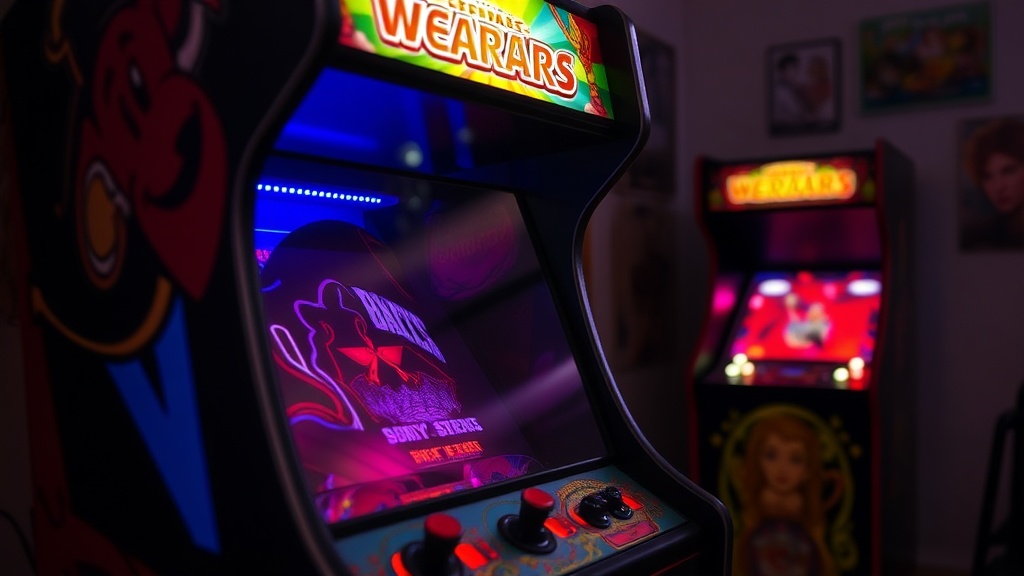
Protecting Your Arcade Cabinet Artwork from Sun Damage

This guide covers the specific methods and materials you need to shield your arcade cabinet graphics from UV degradation and sunlight. You'll learn why light exposure ruins high-gloss finishes and how to apply protective layers that won't damage your original artwork.
If you've ever walked into a room and noticed that your cabinet's side art looks faded or "washed out" compared to the vibrant colors in the original photos, you're seeing the effects of light-induced chemical changes. UV rays don't just fade the ink; they can actually break down the pigments and the clear coat, leading to cracking or peeling. Whether you're displaying your machine in a bright living room or near a window, understanding how to manage light exposure is a big part of long-term preservation.
How does UV light damage arcade graphics?
Sunlight contains ultraviolet radiation that acts like a slow-burning fire for many pigments. Most vintage arcade graphics use specific dyes and inks that weren't designed to withstand decades of direct light exposure. When UV rays hit these surfaces, they break the molecular bonds of the ink (a process often called photodegradation). This results in the loss of color saturation—especially in reds and blues, which tend to be the most vulnerable.
Beyond the color, the substrate itself can suffer. If your machine has a vinyl wrap or a printed paper decal, the heat from the sun can cause the adhesive to dry out. This leads to bubbling or the edges of the artwork peeling away from the wood cabinet. You can read more about the physics of light degradation on the NASA science page regarding how radiation affects materials.
Can I use UV-blocking film on my arcade cabinet?
Yes, and it's one of the most effective ways to protect a machine that sits in a room with high natural light. UV-blocking film (often called window tint or architectural film) is designed to be applied to glass, but you can use similar principles for your display area. If your cabinet is housed in a glass-fronted display case or a custom-built cabinet, applying a high-quality UV-blocking film to the glass is a smart move.
For the artwork itself, you aren't looking for a film to stick directly to the art—that's risky. Instead, you're looking to control the environment. If your machine is near a window, consider using UV-blocking window films on the window itself. These films can block up to 99% of UV rays without significantly darkening the room. This protects not just your arcade machine, but your entire collection from the same fate. For those who want to get technical about light spectrums, the U.S. Department of Energy provides resources on how light and heat affect indoor environments.
Common Mistakes in Protecting Cabinet Art
A lot of collectors try to "fix" faded art by applying a new layer of clear coat or varnish. While this might provide a temporary shine, many modern spray-on clear coats contain chemicals that can actually react poorly with old vinyl or paper. If you apply a high-gloss lacquer over a decal that isn't meant for it, you might find the art bubbling or the ink bleeding through the finish.
- Applying wet-style cleaners: Never use heavy chemical cleaners on your artwork. They can dissolve the ink or eat through the protective finish.
- Using generic spray paints: A quick coat of clear spray paint from a hardware store can often turn yellow over time, ruining the aesthetic of your machine.
- Ignoring heat: People often focus on light, but heat is the silent killer. A machine sitting in a direct sunbeam gets hot, which accelerates the drying of the adhesive.
What is the best way to display my machine safely?
The gold standard for any serious collector is placement. If you can, place your machines in a room with controlled lighting. This means avoiding direct sunlight and using LED-based lighting for your display. Unlike older fluorescent or incandescent bulbs, LEDs emit very little UV radiation, making them much safer for your vintage graphics.
If you're building a custom display area, consider the following setup:
| Method | Pros | Cons |
|---|---|---|
| UV-Blocking Window Film | Highly effective, protects the whole room. | Requires installation on windows. |
| LED Lighting | Low heat, low UV, very safe. | Doesn't stop direct sunlight. |
| Blackout Curtains | Cheap and effective for sun. | Makes the room dark/moody. |
| Display Case with UV Glass | Maximum protection for the machine. | Can be expensive and bulky. |
Remember, the goal is to create a stable environment. Fluctuations in light and temperature are what cause materials to expand, contract, and eventually crack. If you're displaying a machine in a high-traffic area or a public space, your maintenance schedule should include a quick visual check of the art edges every few months to ensure no peeling is starting. A small bit of heat-resistant adhesive can often fix a minor edge-lift before it becomes a full-scale problem.